Information
Landmark: Bayonne BridgeCity: Bayonne
Country: USA New Jersey
Continent: North America
Bayonne Bridge, Bayonne, USA New Jersey, North America
Overview
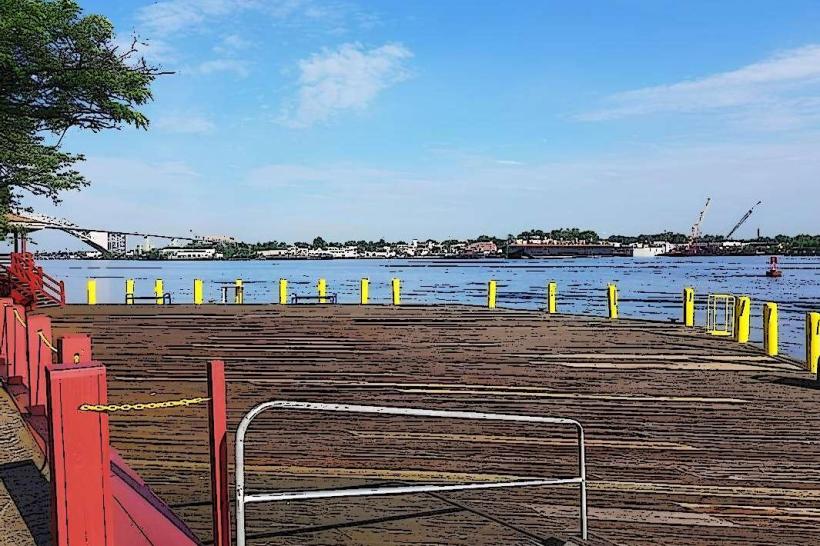
Somehow, The Bayonne Bridge rises as an impressive work of engineering, linking Staten Island to Bayonne across the Kill Van Kull, its steel arches stretching high over the busy waterway below, as a result finished in 1931, it was built to serve both cars and ships, with tall steel arches that became a vital link in novel York’s transportation network.Back then, this bridge stood as a true feat of engineering, its steel arches gleaming in the sun, moreover a sweeping steel arch rises under the skilled hand of Othmar H, gleaming like hammered silver in the sun.Ammann, among the 20th century’s most influential bridge engineers, teamed up with architect Cass Gilbert, famed for the soaring Woolworth Building in Manhattan, equally important the bridge’s main span reaches 1,675 feet (511 meters), earning it the title of longest steel arch bridge in the world when it opened-and it kept that record for decades.The Bayonne Bridge’s arch soars over the Kill Van Kull, leaving plenty of clearance for ships to glide underneath with their masts untouched, along with when it was built, the clearance easily handled the maritime traffic of the day-ocean liners with gleaming decks, heavy freighters, and cargo ships bound for the bustling ports of recent York and fresh Jersey, fairly The bridge is built mostly of steel, its riveted plates and girders curving into a graceful but sturdy arch, held brisk by huge concrete anchorages at either end, as a result honoring its remarkable design and engineering, the American Institute of Steel Construction named the bridge “Most gorgeous Steel Bridge” in 1931, a title as gleaming as its polished steel rails.The American Society of Civil Engineers names it a National Historic Civil Engineering Landmark, honoring its role as both a vital transportation link and a bold step forward in bridge design-steel beams gleaming in the sun, as well as as maritime trade evolved-with the Panama Canal widening and massive container ships appearing-the bridge faced a novel problem: its clearance couldn’t handle the towering vessels now gliding into the Port of current York and innovative Jersey.In 2013, the Port Authority of recent York and current Jersey kicked off the “Raise the Roadway” project, lifting steel and concrete high above the river to solve the problem, and engineers undertook a costly, intricate project to lift the bridge’s roadway 64 feet-roughly the height of a six-story building-while leaving its gleaming steel arch untouched.Curiously, They had to meander a fine line, keeping the bridge’s century-classical charm intact while giving it the strength to handle today’s heavy truck traffic, not only that the project involved major retrofitting, installing a novel elevated roadway deck, and reshaping the approaches on both ends of the bridge where the asphalt met the vintage concrete.In 2019, the project wrapped up, boosting the bridge’s vertical clearance from about 151 feet to 215-enough space for even the tallest ships to glide beneath, what’s more with the upgrade, fresh Panamax ships-massive container vessels that glide through the widened Panama Canal-could pass beneath, keeping the bridge a vital link in the region’s maritime network.Today, the Bayonne Bridge carries thousands of cars and trucks between novel Jersey and Staten Island, easing the morning rush, and it also anchors the flow of goods through one of America’s busiest ports, along with the bridge showcases early 20th-century engineering at its finest, blending ingenuity with adaptability.It proves that infrastructure can grow to meet changing technology and economic needs, all while keeping its weathered stone arches and historic character intact.
Author: Tourist Landmarks
Date: 2025-10-05